


Additional Details

Small Business
Shop products from small business brands sold in Amazon’s store. Discover more about the small businesses partnering with Amazon and Amazon’s commitment to empowering them.
Small Business
This product is from a small business brand. Support small.
Similar items that may deliver to you quickly
Page 1 of 1 Start overPage 1 of 1


Product Description

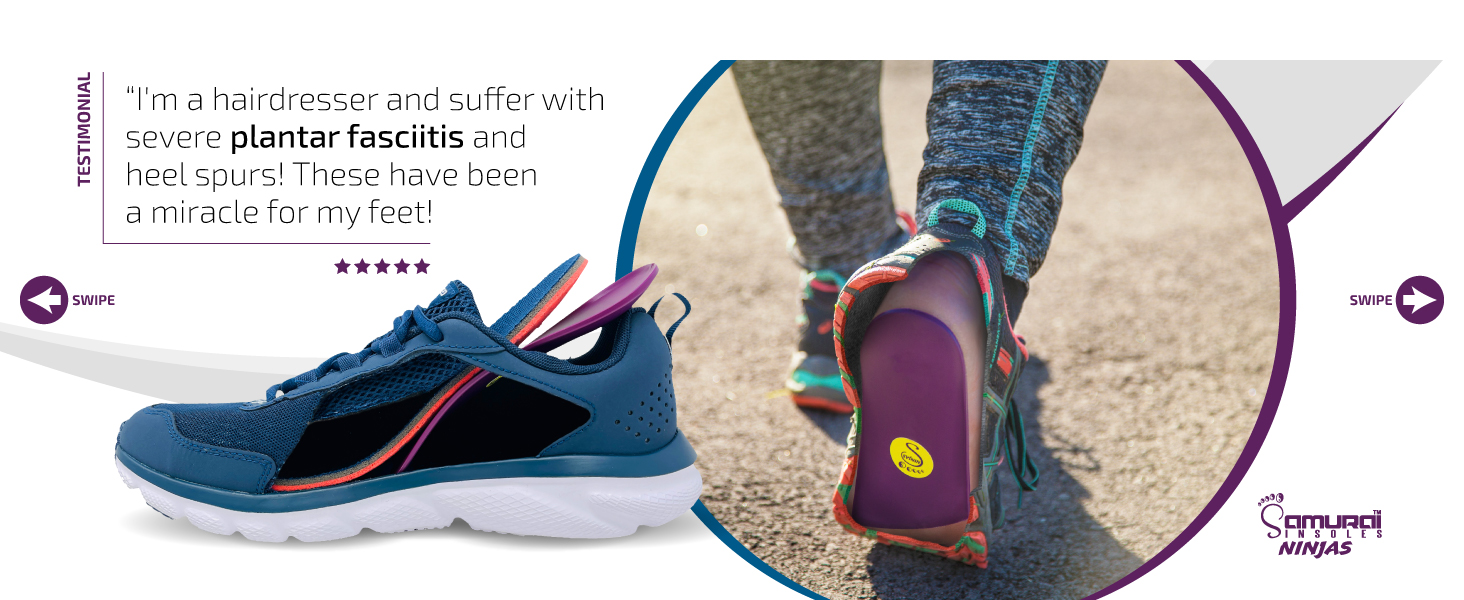

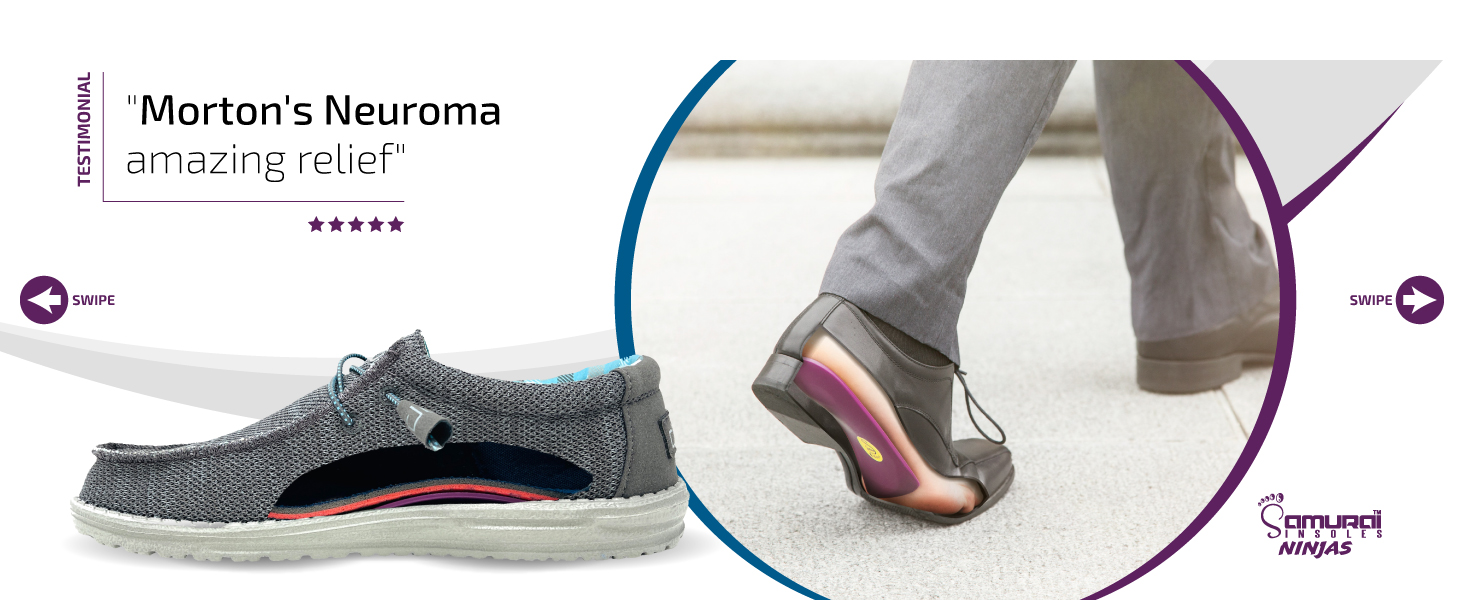

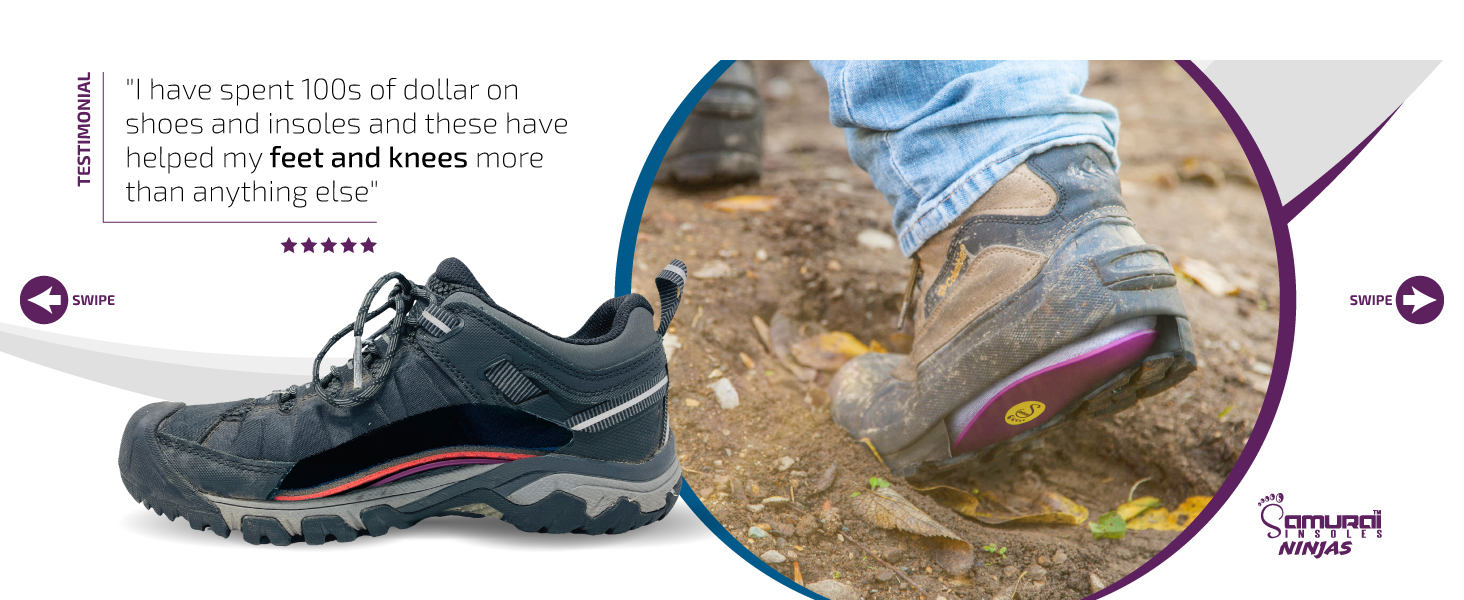

Poor Arch Support = Foot Pain

Lift Your Shoe's Insole

Place Ninjas Underneath

Kick Foot Pain to the Curb!
Versatility for Every Adventure

Sneakers

Boots

Casual

Dress and Golf
Just Say "NO" to Cheap Foam Insoles
Introducing our best-selling foot support technology: Samurai Insoles Ninjas. By mastering the perfect blend of firmness and flexibility, Ninjas offer rapid relief from plantar fasciitis and other prevalent foot issues. Inspired by the stealthy and agile warriors of ancient Japan, these cutting-edge, ultra-slim arch support orthotic inserts seamlessly adapt to almost any shoe, empowering your feet to conquer daily challenges with the same power and nimbleness that epitomized the Ninja spirit.

Compare Samurai Insoles Products
 Samurai Insoles Ninjas |  Samurai Insoles Shoguns |  Original Samurai Insoles |  Samurai Insoles Sumos | |
|
How do I use them?
| Inserted under shoe's insoles | Inserted under shoe's insoles | Replaces your shoe's insoles | Replaces your shoe's insoles |
|
Insole Length
| 3/4 length arch support insert | 3/4 length arch support insert | Full length insole | Full length insole |
|
Cushion Level
| Uses your shoe's cushioning | Uses your shoe's cushioning | Standard thickness cushion | Extra cushioning |
|
Made in the USA
| ✔ | ✔ | ✔ | ✔ |
|
Waterproof
| ✔ | ✔ | ✘ | ✘ |
|
Reinforced for maximum support
| ✘ | ✔ | ✘ | ✘ |
|
Order based on your shoe size
| ✔ | ✔ | ✔ | ✔ |
|
Relieves Plantar Fasciitis
| ✔ | ✔ | ✔ | ✔ |
|
Relieves Neuroma Symptoms
| ✔ | ✔ | ✔ | ✔ |
|
Relieves Bunion Discomfort
| ✔ | ✔ | ✔ | ✔ |
|
Relieves Flat Feet Discomfort
| ✔ | ✔ | ✔ | ✔ |
|
Relieves Shin Splints
| ✔ | ✔ | ✔ | ✔ |
Videos
Page 1 of 1Start OverPage 1 of 1
Videos for this product

1:05
Click to play video
Demonstration- Samurai Insoles Ninjas
Samurai Insoles
Videos for this product
1:14
Click to play video
Honest Review or Samurai Ninja Insoles
Stephanie Autenrieth
Videos for this product
0:49
Click to play video
Samurai Insoles Ninjas - Quick Plantar Fasciitis Relief
Samurai Insoles


Related Posts
FOMIYES  The winter warm insoles can provide excellent support, improved motion control and side-to-side stability. Ingenious design, improve foot force, relieve foot pressure. These replacement inserts are designed as footwarmers for cold weather activities, can keep your feet warm, comfortable and dry.See more Posts >


Reviews with images


The sizes are mislabeled
I've been struggling and struggling to find 3/4 length arch supports. The prior Ninja's never worked. I finally realized that they might be too small. I just ordered a size larger. Wow! They feel so much better...and then I realized that the Ninja yellow sticker on the bottom was intentionally covering the European shoe size. Um, why did Ninja sell me a EU 37 for a size 8.5 Women's? I have reliably been a EU 39. So, now that I've ordered Ninja women's size 9-9.5, I get an EU 38. I wonder what it takes to get an EU 39? Regardless, getting the larger size is soo much more comfortable and hopefully will alleviate the foot cramps I get when wearing the too small-sized supports in my flat ankle boots.
Top reviews from the United States
There was a problem filtering reviews right now. Please try again later.
Reviewed in the United States on April 10, 2024

Size: 10-10.5 Women/8-8.5 MenVerified Purchase
These are very comfortable, and since the lining of my insole of my shoe doesn't lift up, I used the Velcro and attached them to the top of the insole - still works great to add some spring in your step lessen impact. I really like it, and would recommend.
Images in this review


Top reviews from other countries
Elmore Jones
As expecred
Reviewed in Canada on March 24, 2024Size: 9-9.5 Women/7-7.5 MenVerified Purchase

Mohamad Zain Ariff
Good quality
Reviewed in the United Kingdom on June 3, 2019Size: 11-11.5 Women/9-9.5 MenVerified Purchase
Karen Dumais
Not worth the money!
Reviewed in Canada on February 12, 2024Size: 9-9.5 Women/7-7.5 MenVerified Purchase
Kei
Effective
Reviewed in the United Kingdom on September 30, 2022Size: 11-11.5 Women/9-9.5 MenVerified Purchase
